

The Truth of History Will Not Vanish with Destruction: Katsutoshi Takegami, Descendant of the Biological Warfare Unit of Japanese Invaders, Travels to Nanjing to Donate Historical Materials
“I am not an academic researcher. I simply want to uncover the true nature of Unit 1644 and find out exactly what my father did in China,” said 77-year-old Katsutoshi Takegami as he donated a collection of historical materials to the Memorial Hall of the Nanjing Massacre Victims by Japanese Invaders. On the afternoon of the 26th, the “Donation Ceremony of Cultural Relics and Historical Materials by Japanese Friend Katsutoshi Takegami” was held in Nanjing. Items donated to the Memorial Hall included copies of the personnel rosters of Unit 1644 and the 158th Field Hospital, the military register of Toshiichi Miyashita along with the photocopies of the photo albums documenting the marchingfootages of the Japanese invaders.
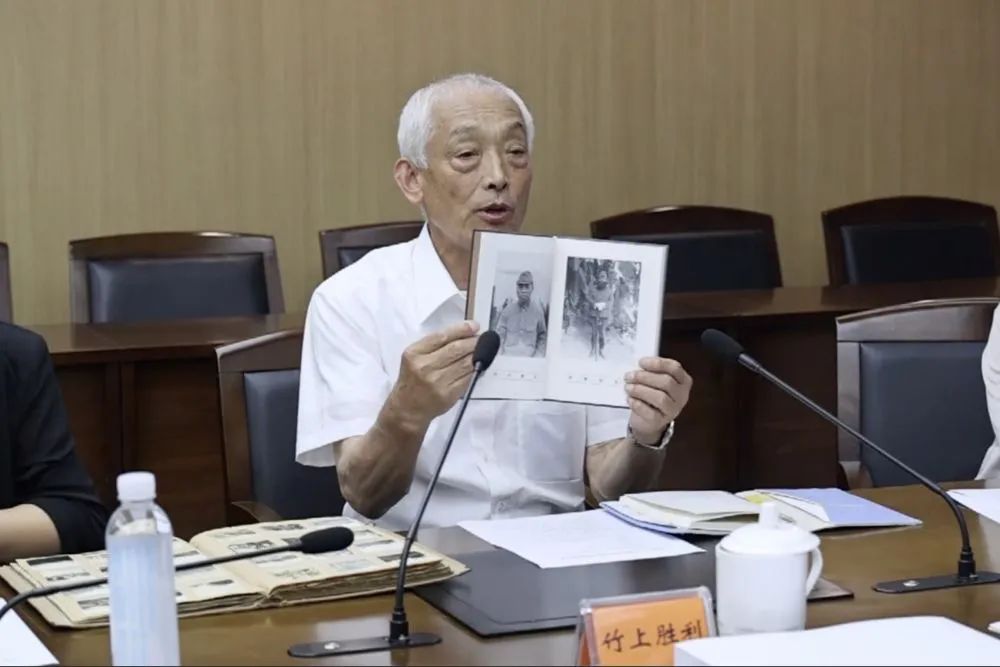
Katsutoshi Takegami at the Donation Ceremony of Cultural Relics and Historical Materials
Three days ago, Katsutoshi Takegami, from Nagano Prefecture, Japan, arrived in Nanjing, carrying with him not only historical materials but also long-concealed family secrets. Years ago, while sorting through old belongings, he unexpectedly discovered several photo albums belonging to his father, Toshiichi Miyashita, which documented the activities of the Imperial Japanese Army’s Epidemic Prevention and Water Purification Department in East and Central China. Takegami discovered that his father had traveled to China three times beginning in 1932, serving as a Medical Orderly and in other capacities, and was transferred to Unit 1644 in 1941. While ostensibly engaged in epidemic prevention, the Unit in fact cultivated deadly bacteria such as cholera, typhoid, and plague. This was the true nature of Unit 1644, whose headquarters were based in Nanjing. “My father rarely spoke about his military service during his lifetime. He was not highly educated and had a very gentle disposition.” Katsutoshi Takegami recalled. Although there were no bloody photographs in the album, the appearance of war criminals like Takeo Sato still made Takegami deeply uneasy. “To my knowledge, it was quite rare for someone like my father to promote rapidly from a Medical Orderly to a Lieutenant. So I was deeply concerned that my father might have been involved in wrongful acts.” Takeo Sato was precisely the “executioner” of human experimentation. Lv Jing, Associate Professor at the School of History of Nanjing University, stated: “Takeo Sato served successively as the Commander of the Imperial Japanese Army's 4th Epidemic Prevention and Water Purification Department, Chief of the First Section of Unit 1644, and Director of the Fukuoka Army Hospital. His research on glanders bacilli was closely linked to Biological Warfare.”
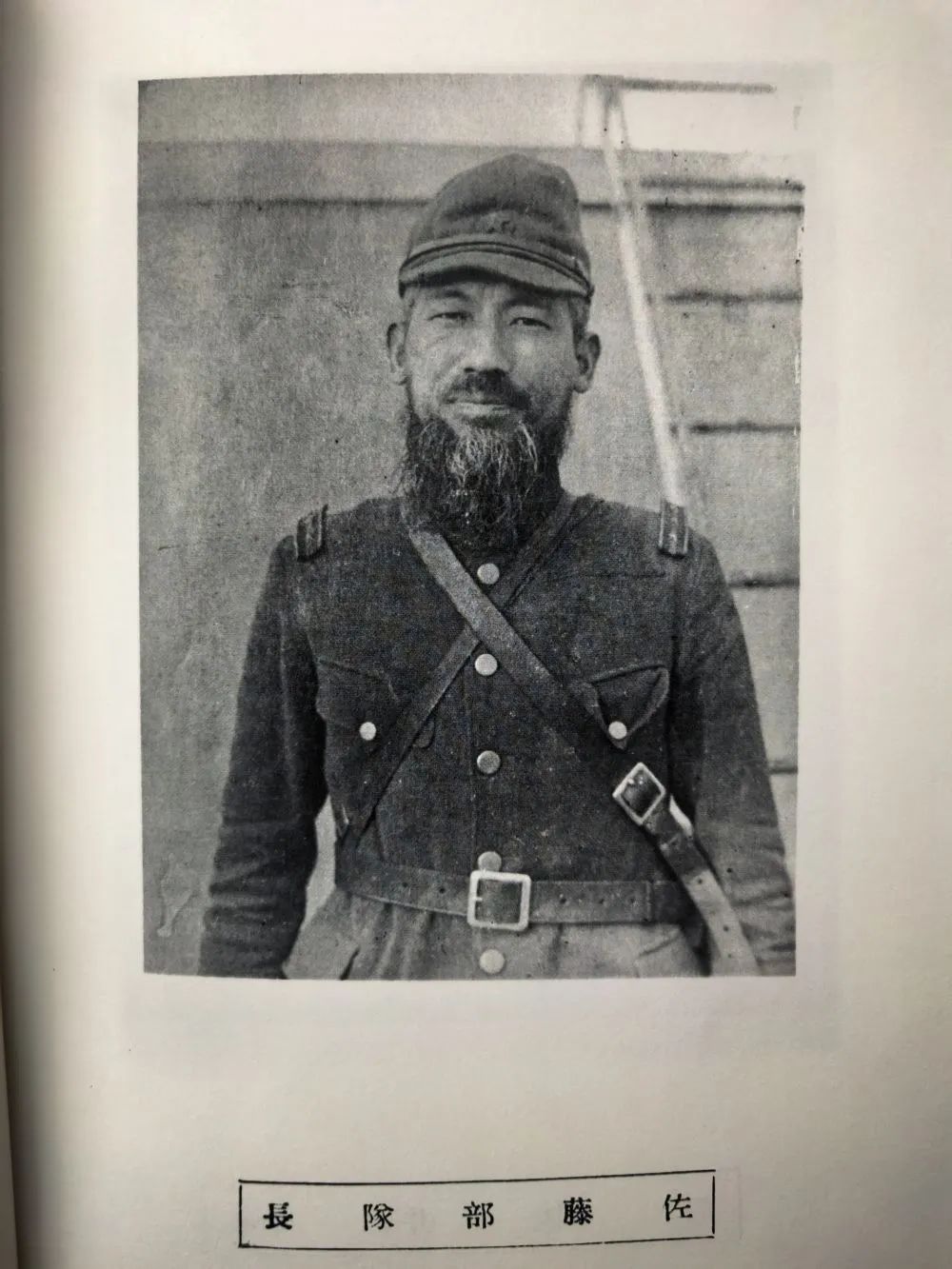
Takeo Sato, former Commander of the Imperial Japanese Army’s 4th Epidemic Prevention and Water Purification Department, later transferred to be as the Chief of the First Section of Unit 1644
However, in the aftermath of the war, the Japanese invaders destroyed original archives and deliberately concealed the crimes of human experimentation, leaving the atrocities of Unit 1644 largely unknown for a long time. Yet the truth cannot remain buried forever. Those who seek it have never ceased in their pursuit. In recent years, significant progress has been made in historical research on the Biological Warfare conducted by the Japanese invaders. The remains of victims of bacterial experiments carried out by Unit 1644, along with surgical scissors, unit insignia, and historical photographs, have been collected by the Memorial Hall of the Nanjing Massacre Victims (by Japanese Invaders). Meanwhile, the 11-volume Collection of Documents on Biological Warfare and Epidemic Prevention During the Chinese People’s War of Resistance Against Japanese Aggression, jointly compiled by Nanjing University and international scholars over a period of eight years, was officially published in June this year, helping to establish a more comprehensive evidentiary system for reconstructing the truth of this history. Lv Jing explained that Chinese scholars have already conducted analyses of Japan’s research on glanders and other microorganisms carried out in the Soviet Union and Northeast China. The next stage of research will focus on the similarities and differences between Japan’s Biological Warfare practices in the Far East and those implemented in China, as well as their evolution over time. After arriving in Nanjing, Katsutoshi Takegami visited the Historical Exhibitions, carefully examined photographs in the Memorial Hall’s collection, engaged in discussions with scholars studying Biological Warfare, and held conversations with descendants of survivors of the Nanjing Massacre… Each of these experiences gave him a clearer understanding of the history and the crimes committed. Facing the remains of victims of biological experiments, Katsutoshi Takegami stood still, gazing at the skeletal remains. These remains of the victims of Biological Warfare were discovered in August 1998 during deep excavation at a construction site in Nanjing, comprising 41 skulls and a large quantity of limb bones. He said, “Their sacrifice fills me with deep sorrow.”
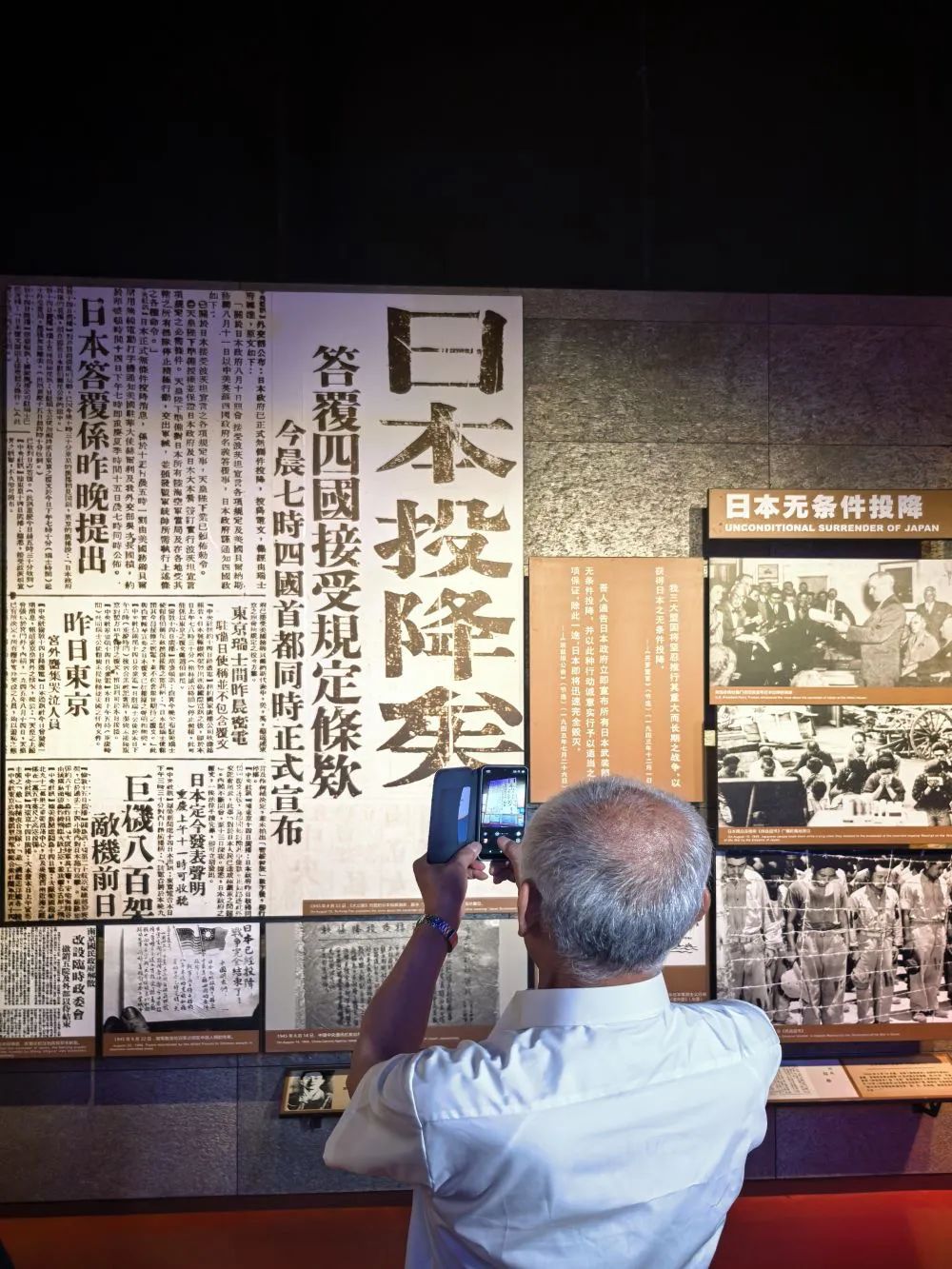
Katsutoshi Takegami visiting the Memorial Hall of the Nanjing Massacre Victims by Japanese Invaders
While speaking with Xia Yuan, a descendant of a Nanjing Massacre survivor, Katsutoshi Takegami learned how survivor Xia Shuqin successfully countered defamatory accusations brought by Japanese right-wing forces, as well as how multiple generations of the Xia family have worked to investigate and share the truth of history. Deeply moved, Takegami respectfully bowed to Xia Yuan in acknowledgment. “I really admire you.” Katsutoshi Takegami told Xia Yuan, “My own children are not interested in learning the truth, and this seems common among Japan’s younger generation. The remaining Japanese veterans are passing away. Finding more evidence and restoring the truth as soon as possible is not only my wish, but also my responsibility.”
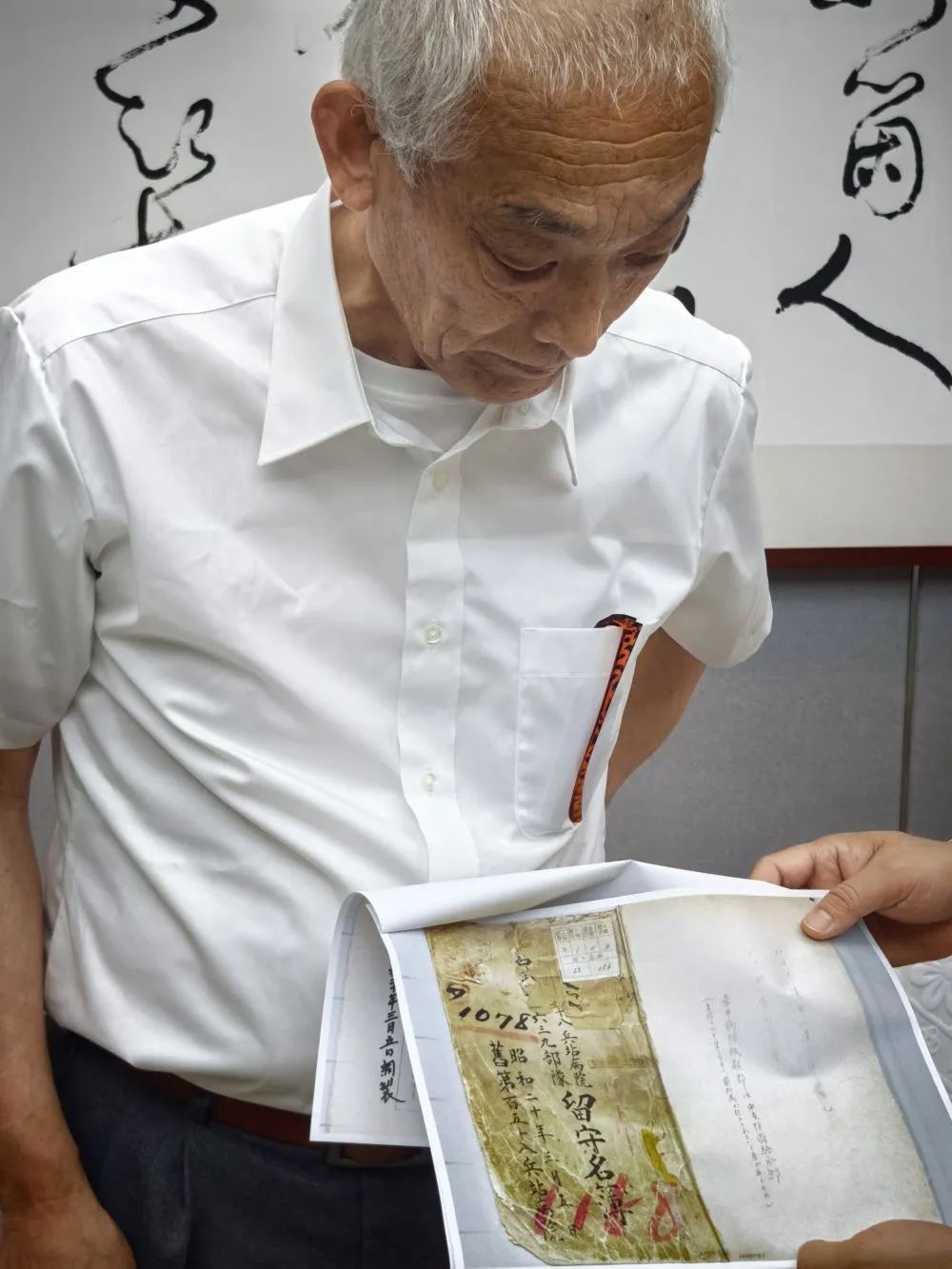
Katsutoshi Takegami at the Donation Ceremony of Cultural Relics and Historical Materials
“The truth of history will not vanish with destruction.” Zhou Feng, Director of the Memorial Hall of the Nanjing Massacre Victims by Japanese Invaders, stated that the historical materials donated by Katsutoshi Takegami will further enrich the Memorial Hall’s collection, provide new evidence for the study of the Japanese invaders’ Biological Warfare crimes, and inspire more people to seek the truth of history and uphold the dignity of history.