

International Friends’ Comments on the Journal of Japanese Invasion of China and Nanjing Massacre
The Beijing Review published an article today entitled International Friends’ Comments on the Journal of Japanese Invasion of China and Nanjing Massacre, with the full text as follows:
On December 13, 1937, the Japanese army invaded Nanjing. Over the following six weeks, they massacred more than 300,000 civilians and disarmed soldiers in Nanjing. This was a catastrophe for the Chinese nation and a tragedy for humanity.
Remembering history is the key to forging the future. Never forgetting the war is essential for safeguarding peace.
In recent years, more and more books and journals on the Nanjing Massacre have been translated into foreign languages, conveying the truth of history to the whole world. Among them is the Journal of Japanese Invasion of China and Nanjing Massacre. It is a professional academic journal (quarterly) published to both domestic and international audiences, jointly sponsored by The Memorial Hall of the Nanjing Massacre Victims (by Japanese Invaders) and Nanjing Press.
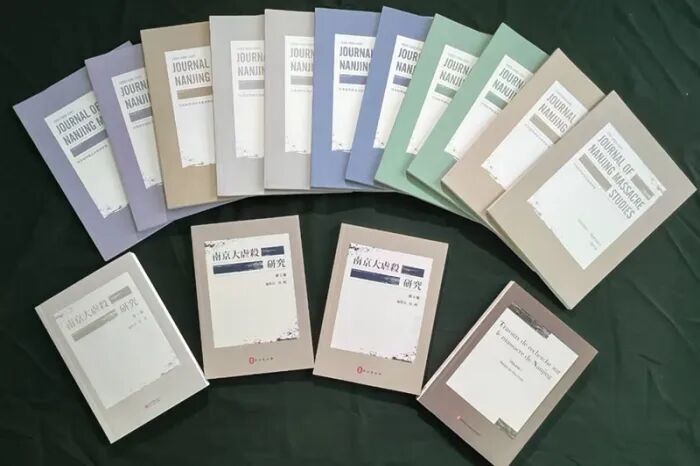
Foreign-language editions of the Journal of Japanese Invasion of China and Nanjing Massacre
Since 2019, in collaboration with the China Foreign Languages Publishing Administration (CLFPA), the Journal has successively published editions in English, Japanese, and French, distributed in more than 50 countries and regions. Its reach has extended to over 420 internationally renowned universities and libraries, such as Harvard University and the British Library, as well as over 200 Japanese friendship organizations, and 140 overseas bookstores.
The following are the comments on the Journal of Japanese Invasion of China and Nanjing Massacre from the descendants of international friends who supported the Chinese People’s War of Resistance Against Japanese Aggression and from international media professionals:
Michael Crook
Son of Isabel Crook, Chair of the International Committee for the Promotion of Chinese Industrial Cooperatives, and a pioneer of English education in the People’s Republic of China
Remembering history is not about perpetuating hatred or seeking revenge, but about using history as a mirror, looking to the future, safeguarding peace, and its lasting realization. This is also my expectation for the Journal of Japanese Invasion of China and Nanjing Massacre. I have gone through two issues of the Journal, which include research on foreign friends who rescued Chinese people during the Nanjing Massacre, such as John Rabe and the Austrian engineer Rupert R. Hatz. I find these articles highly valuable and hope that more pieces of this kind will be published in the future. Thomas Rabe, the grandson of John Rabe, is a good friend of mine. I suggest that the Journal invite the descendants of international friends who either helped expose Japanese atrocities or rescued Chinese people during the Nanjing Massacre to contribute articles, so that more people can learn about this history.

△Michael Crook
Eric Foster
Nephew of Helen Foster Snow, an American journalist
The Journal of Japanese Invasion of China and Nanjing Massacre is a detailed and rigorous academic journal, providing important references to ensure the authenticity of its research findings.
No one can deny this historical fact. I say this because, four years ago, in preparation for my forthcoming book, I studied the historical facts of the Nanjing Massacre. At that time, there were still people on the Internet attempting to deny this history and obscure the truth. Ultimately, I wrote a nine-page article on the Nanjing Massacre, hoping to help more people around the world better understand this history.
We all know that during World War II, the German Nazis committed the crime of the massacre in Europe. The Japanese army, many of whom had received training in Germany, also carried out similar massacres in Asia, particularly in Nanjing. Why had I never heard of this history in Western societies before coming to China in 2010? We only knew about the massacres that occurred in Europe. I hope that the publication and distribution of the Journal of Japanese Invasion of China and Nanjing Massacre will help more people learn about this important history.

△Eric Foster
Mahnoor Makhdoom
Editor, International Department, The Daily Mail, Pakistan
Many people around the world are familiar with Auschwitz, but they know nothing about the Nanjing Massacre. This is because much of the historical narratives in that era were often centered on Europe, leaving many international audiences largely unaware of the atrocities that occurred outside Europe during the same period. Moreover, for decades, the Jewish community has been actively publicizing the suffering their people endured during World War II. We can see this reflected in countless films, documentaries, and books.
Therefore, I believe that the publication of the Journal of Japanese Invasion of China and Nanjing Massacre is of great importance. I understand that it has been in publication for several years. It could become a valuable platform for the international community to learn about the historical facts of the Nanjing Massacre. I believe the Journal could serve as a platform to promote international exchanges, organize seminars, and establish collaborations with journals in other countries. With editions in English and other languages, I look forward to continuing to access its resources in the future so that I can deepen my understanding of this history.

△Mahnoor Makhdoom
Einar Tangen
American current affairs commentator
My understanding of the Nanjing Massacre comes from History classes I took while studying in the United States and the United Kingdom. With its bloody, cruel, and unprecedented scale of atrocities, the Nanjing Massacre by the Japanese invaders revealed the depths of cruelty and inhumanity that humanity is capable of.
The Journal of Japanese Invasion of China and Nanjing Massacre is of great significance and holds important academic value. I have read its articles year by year. I believe the articles are well written, drawing many conclusions and delving deeply into many issues surrounding the Nanjing Massacre and its subsequent impact. One article even discussed this issue from a legal perspective. As a lawyer, I pay close attention to this perspective.
However, many people have limited access to historical materials. How can we convey the truth of history to them? To help more people understand this history, we need to leverage mediums such as videos, documentaries, and social media, combining both short-form and long-form content. Relying solely on text is insufficient; it must be supplemented with images and video footage. Only when images of Auschwitz, the Nanjing Massacre, and Gaza are presented together can the world truly recognize that these are all same atrocities. These bloody, cruel, and inhumane atrocities are still being perpetrated in certain parts of the world today.
The Nanjing Massacre, as a tragic historical example, serves as a warning to humanity that such atrocities must never be repeated.
Tragically, in today’s world, atrocities have never ceased. We must awaken the conscience of humanity and communicate in ways that touch people’s hearts. Only then can we shift people’s awareness and deliver a message of hope: only by no longer trampling on human dignity can such tragedies be prevented from happening again.

△Einar Tangen