

The Great Cold Will Pass, but Their Pain Never Will
Today marks Great Cold (Dahan), the final solar term of the Chinese lunar calendar. Years ago, the film Great Cold, centered on victims of the Japanese army’s “Sex Slaves” system, moved countless viewers to tears. Since then, whenever this solar term returns, we are reminded of them once more. The Great Cold will eventually pass, and spring will come again, but the scars left by history must never be forgotten.

Brutal and Inhumane Sexual Violence
The Japanese army’s systematic and large-scale implementation of the “Sex Slaves” system began after the occupation of Nanking. In the early period of the occupation, forcibly conscripted women from Korea and Japan could no longer satisfy the demands of the Japanese army, and the Japanese army thus turned its predatory gaze toward Chinese women.
On January 26, 1938, four farmers from Jiangning County, Nanking, submitted a petition to German and Danish personnel at the Jiangnan Cement Factory. The petition stated that in Shishan Township alone, 32 women had been abducted by Japanese troops. The oldest victim, Mrs. Wang, was 60 years old, while the youngest was only 9. Fourteen of the victims were girls under the age of 15.
During the Nanjing Massacre, among the reports of Japanese atrocities submitted by the International Committee for the Nanking Safety Zone to the Japanese authorities were numerous cases documenting the abduction of Chinese women to temporary “Sex Slaves” Stations.
Case No. 57 (December 16, 1937): Japanese soldiers seized seven young women from the Army War College, ranging in age from sixteen to twenty-one. Five were later released and allowed to return home. According to a report received on the eighteenth, each of them had been raped six or seven times a day...
Case No. 153 (December 25, 1937): One Japanese officer and two Japanese soldiers abducted fifteen-year-old Miss Li from No. 14 Gulou Xincun.
…
The Japanese army also extended its predation into refugee shelters. Masuo Inoue, a soldier of the 33rd Infantry Regiment of the Japanese 16th Division, later recalled:
After the fall of Nanking, I was assigned to guard Ginling College (Ginling Women's College of Arts and Sciences). Those who frequently entered and left the campus were not only from the 33rd Regiment, but also from the 9th Division and the 30th Brigade of the 16th Division. They came in trucks. Each truck carried about twenty girls... Very few of the girls who were taken away were ever brought back.
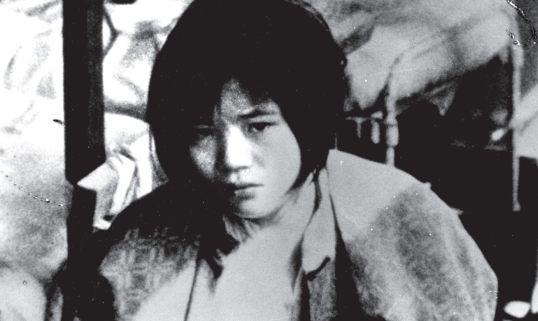
This young woman was taken from the Safety Zone by Japanese soldiers and detained in southern Nanking for 38 days, during which she was raped seven to ten times every day.
Deception and Abduction
The Japanese army exploited “refugee registration” procedures to select women. According to Nanking Under the Enemy’s Brutal Rule (《敌蹂躏下的南京》):
In order to complete the registration procedures, women throughout the city had no choice but to risk their lives to register... Two female students from Huiwen Girls’ Middle School and Nanking Girls’ Middle School even changed into ragged clothing and smeared soot from cooking pots on their faces before registering, yet they were still forcibly detained by the enemy... The number of women seized by the enemy amounted to several thousand.
Japanese troops frequently deceived Chinese women with false promises. They claimed to be recruiting women for jobs such as laundry, cooking, and cleaning, only to force them into serving as “Sex Slaves” once night fell.

Advertisement for a Japanese army’s “Sex Slaves” Station in Nanking
In August 1954, Yoshikazu Higashiguchi, a soldier of the 38th Infantry Regiment of the Japanese 16th Division, confessed in a written testimony:
Sergeant Murata ordered ten soldiers to raid Chinese homes near the barracks. Under the pretense of hiring women to do laundry, they seized ten women and confined them in the basement of the barracks. Under armed guard, all sixty men of the platoon carried out gang rape.
Japanese troops even forcibly “requisitioned” women from foreign embassies and consulates. According to A Record of Blood and Tears in the Fallen Capital (《陷都血泪录》):
On the afternoon of December 30, 1937, Japanese soldiers arrived at the Italian Embassy and forcibly ‘borrowed’ three young women, claiming that ‘they were only being borrowed for the New Year holiday and would be returned after a few days.
The Unending Pain They Carried for Life
The direct victims of the Japanese army’s “Sex Slaves” system were undoubtedly the countless women forced into sexual slavery. According to investigations, a victim of the Japanese army’s “Sex Slaves” system was subjected, on average, to assaults by twenty to thirty Japanese officers and soldiers each day; at the worst of times, the number could exceed one hundred.
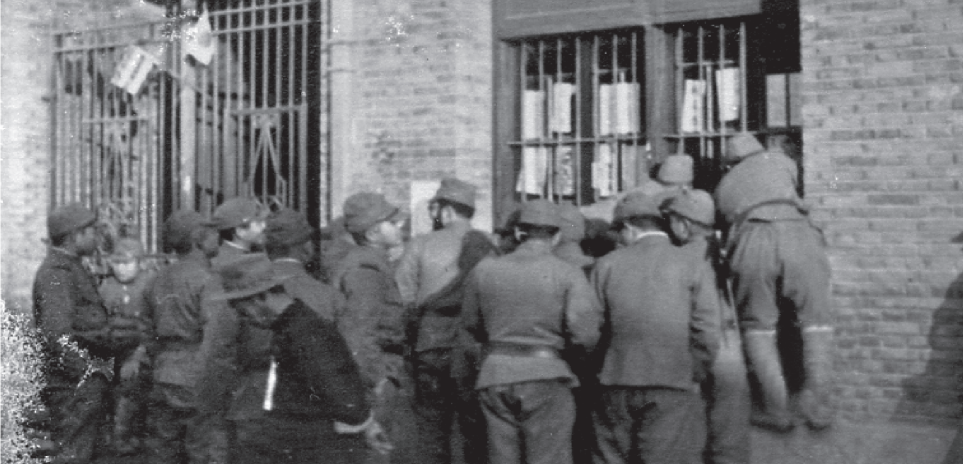
Japanese army’s “Sex Slaves” Station established in Nanking in the first lunar month of 1938
On February 7, 1938, Ta Kung Pao (Hankou Edition) published an accusatory article written under the pseudonym “Anonymous” by a Chinese soldier who had escaped from Nanking:
I only managed to escape from the vicinity of Chu County in early January. Before December 26 of last year, I had remained in Nanking and was detained in the enemy camp for more than ten days.
...I had no choice but to carry water into the room. The moment I entered, I saw two Chinese women lying there under a blanket... At dusk, I saw two naked female corpses dragged out. Day and night alike, there were always cries of agony mixed with laughter.
Even those survivors fortunate enough to escape the hellish ordeal could never free themselves from its nightmares. Their bodies had been devastated, and many contracted diseases that could scarcely be cured. On June 22, 1939, the diary of Albert N. Steward, an American professor at the University of Nanking, recorded testimony provided by an American doctor at Nanjing Drum Tower Hospital:
From their experience at the hospital, they said that since the Japanese entered the city, the rate of venereal disease had risen from 15 percent to 80 percent... The women had virtually no protection against such diseases and soon became seriously ill. Once they were no longer considered useful for this trade, new women were continually demanded as replacements.
The Japanese army’s “Sex Slaves” system constituted an atrocity rarely seen in the history of human civilization. It was an assault on human dignity and a brutal violation of basic human rights, inflicting immense physical and psychological suffering upon vast numbers of women. By coercing thousands upon thousands of women into sexual slavery and reducing them to tools for sexual exploitation, Japanese militarism exposed its cruelty, barbarity, and savagery. This was not merely the crime of an individual military unit, but a crime committed by the state itself.